
Your laptop screen flickers and dies right before a major client presentation. A strange, metallic scraping noise starts coming from your car’s front axle on your morning commute. Or perhaps, your company announces a sudden “corporate restructuring” that leaves your department vulnerable.
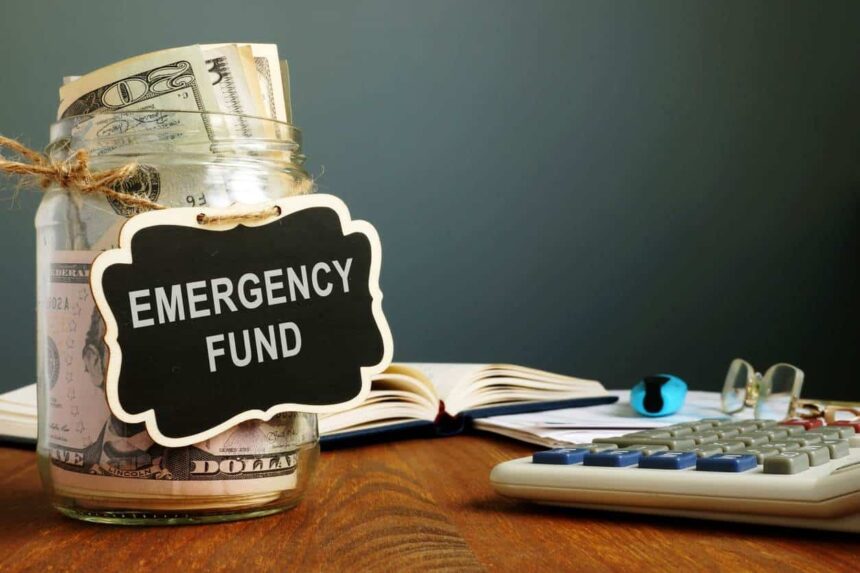
If reading those scenarios gives you a slight knot in your stomach, you are not alone. These moments are stressful, but they become catastrophic if your bank balance is hovering near zero. That is where an emergency fund comes in it acts as a financial shock absorber that turns a potential life crisis into a minor, temporary inconvenience.
Right now, global economic uncertainty is the highest it has been in a generation. Stubborn inflation, high interest rates, and widespread tech and corporate layoffs mean that income stability is no longer guaranteed. Relying on credit cards or high-interest personal loans to bail you out of trouble is a dangerous trap that permanently harms your long-term wealth. Building an independent cash runway is the single most important personal finance move you can make this year. Let’s break down exactly how to build your cash safety net from scratch, without sacrificing your sanity or your lifestyle.
1. Define Your Target Baseline
The standard textbook advice dictates saving three to six months of living expenses. But when you are starting from zero, staring down a $15,000 savings goal feels incredibly discouraging. Instead, focus on building a starter emergency fund of exactly $1,000 or €1,000.
This initial milestone is not meant to sustain you through a job loss, but it easily covers the most frequent micro-emergencies: an unexpected dental procedure, a broken appliance, or an urgent flight home. Calculate your survival number the absolute minimum cash you need to pay for rent, utilities, and groceries each month. Once you know that baseline, you can gradually scale your target from a one-month runway up to a comfortable six-month buffer over time.
2. Firefence Your Savings Accounts
If your emergency money sits in the same account you use to buy groceries and pay for weekend drinks, it will inevitably vanish. Out of sight truly is out of mind when it comes to effective budgeting.
Real-World Benchmark: A recent consumer banking survey revealed that individuals who separate their emergency cash into a dedicated account save over 40% more effectively than those who pool their funds in a single transactional account.
Open a high-yield savings account (HYSA) at an entirely different digital bank. Look for a competitive, inflation-hedging yield and zero monthly maintenance fees. The goal is to make the money accessible enough that you can transfer it to your main bank within 24 to 48 hours, but just inconvenient enough to prevent you from spending it on an impulsive online shopping purchase.
3. Reverse-Engineer Your Savings through Automation
Trying to save “whatever is left over” at the end of the month is a losing strategy. Life always finds a way to claim your leftover cash. To build momentum, you must flip the equation and pay yourself first.
Set up an automatic recurring transfer on the exact day your paycheck hits your checking account. Whether it is $25 a week or $200 a month, automate the process entirely. By removing the friction of human decision-making, you eliminate the temptation to skip a month. If you never see the money in your primary account, you will naturally adapt your monthly expenses to live on the remainder.
4. Conduct a 30-Day Subscription and Micro-Expense Audit
You do not need to give up your daily artisanal coffee to build financial security. However, you do need to stop leaks in your cash flow. Micro-expenses and forgotten digital subscriptions can quietly drain hundreds of dollars from your account every single month.
Log into your primary banking app and export your last 30 days of transactions. Aggressively cancel every streaming platform, app subscription, gym membership, and software trial you haven’t actively used in the last three weeks. Shifting these micro-payments straight into your automated savings workflow can accelerate your starter fund by several months without noticeably changing your day-to-day quality of life.
5. Channel Asymmetric Windfalls Straight to Your Safety Net
One of the fastest ways to supercharge your savings momentum is to redirect money that falls outside your normal salary. Whenever you experience an asymmetric windfall, commit to saving at least 70% of it immediately.
This includes annual workplace performance bonuses, tax refunds, cash gifts, or cash earned from selling unneeded electronics or furniture online. Because your regular lifestyle is already funded by your base salary, investing these one-off windfalls directly into your emergency fund provides a massive boost to your balance without requiring any additional spending cuts.
6. Reframe Your Definition of a True Financial Emergency
An emergency fund is only effective if you protect it from non-emergencies. Before you touch a single dollar of your safety net, your expense must meet three strict criteria: it must be completely unexpected, absolutely necessary, and truly urgent.
A flash sale on holiday flights is not an emergency. A down payment for a luxury wedding gift is not an emergency. A blown radiator on your commuter vehicle is. If you use your fund for lifestyle upgrades, you leave yourself exposed when a real crisis strikes. Be fiercely protective of your capital.
Take the First Step Today Building a robust safety net isn’t about restriction; it is about buying your peace of mind and personal freedom. Do not wait for a perfect financial moment or a massive salary raise to begin. Open your banking app right now, set up a dedicated savings sub-account, and schedule your very first automatic transfer of just $25 for this Friday. Your future self will thank you immensely when the unexpected finally happens.