
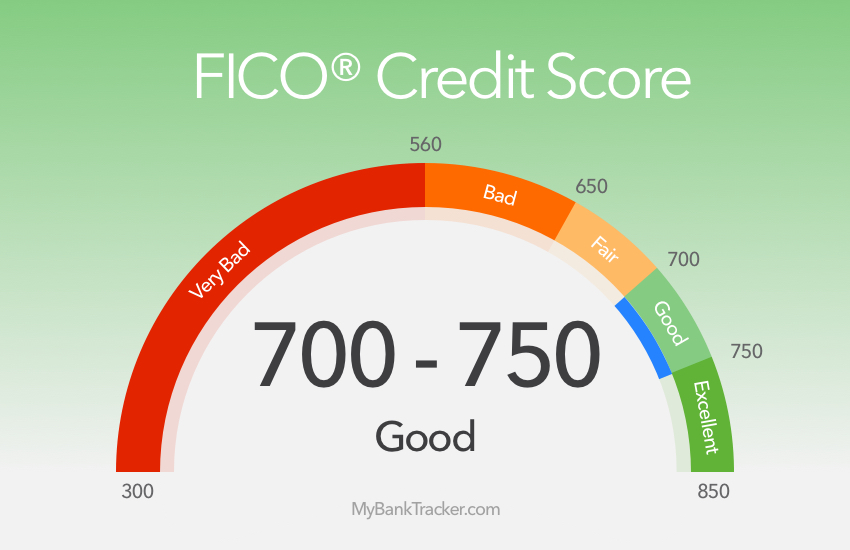
Imagine standing at the dealership, finding the perfect apartment, or pitching your dream business, only to get hit with an astronomical interest rate. Or worse, a flat rejection. It’s a frustrating scenario that happens every day, entirely because of a three-digit number you rarely think about until you absolutely need it.
Whether you are trying to secure a mortgage in London, lease a vehicle in Toronto, or scale a tech startup in Kigali, your credit score is your passport to economic mobility. Right now, global financial conditions are tighter than they have been in a generation. Central banks have held interest rates high to battle inflation, meaning commercial loans and lines of credit are expensive. Because banks are hyper-cautious, a pristine record is no longer just a badge of honor it is a critical shield against predatory rates. Improving your score is the single fastest way to optimize your financial health and save thousands of dollars over your lifetime.
Bumping your score by 100 points might seem like a monumental task, but it relies on predictable mechanics, not magic. Here is your actionable, step-by-step roadmap to making that happen.
1. Unearth and Dispute the Ghost Errors
You cannot fix what you cannot see. Before you spend a single dollar trying to pay down debt, you need to pull your official records from major bureaus like Equifax, Experian, or TransUnion. Shockingly, administrative errors are incredibly common. A recent industry study indicated that roughly one in five people have a verified error on their report that negatively impacts their ranking.
Look for zombie accounts lines of credit you closed years ago that still show up as open or defaulted. Search for identical loans listed twice, or incorrect late-payment markers. If you spot an inaccuracy, file an online dispute immediately with the credit bureau. They are legally required to investigate within 30 days. Erasing just one major reporting error can easily trigger a 50-to-80-point spike overnight, making it the fastest form of organic credit repair available.
2. Drive Your Credit Utilization Below 10%
Your credit utilization ratio measures how much debt you owe compared to your total available limits. For example, if you have a credit card with a $10,000 limit and a balance of $4,000, your utilization sits at 40%. Financial institutions view high utilization as a sign of financial stress.
While standard industry advice says to stay under 30%, high achievers who hold elite scores keep their utilization below 10%. To pull off a 100-point jump, aim for that single-digit sweet spot. If you cannot afford to aggressively pay down the balances right now, you can achieve the same mathematical result by requesting a credit limit increase on your existing cards. Just ensure you do not spend into that new, higher limit.
3. Hack the Billing Cycle with “Micro-Payments”
Here is an insider secret: credit card issuers report your balance to the bureaus once a month, usually on your statement closing date, not your payment due date. If you spend heavily during the month and pay the bill in full by the due date, your report might still reflect a massive balance, signaling high utilization to the algorithms.
To bypass this, practice making bi-weekly or “micro-payments.” Log into your banking app every second Friday ideally timed with your paycheck and clear off whatever you have spent. By splitting your monthly obligation into smaller installments, you artificially keep your reported balance low, consistently feeding positive data points to the scoring model.
4. Piggyback on a Trusted Financial Track Record
If you have a thin profile or are recovering from past financial missteps, building momentum can feel agonizingly slow. You can accelerate this timeline through a strategy known as “authorized user status.”
Find a close family member or partner who possesses an immaculate record and an older, high-limit card. Ask them to add you as an authorized user on that account. You do not even need to receive the physical card or know the account number. Simply being linked to that long, clean history allows their positive repayment behavior to mirror onto your profile, instantly lengthening your credit history and diluting your overall utilization.
5. Keep Ancient Accounts Alive
When you finally clear off a nagging debt, your first instinct might be to close the account in celebration. Resist that urge. The age of your accounts accounts for 15% of your total score. The algorithms favor deep, established roots because they show long-term reliability.
Closing an old card instantly shortens your average account age and slashes your total available lending limit, causing your utilization ratio to spike. Keep those older accounts open and completely dormant. If you worry about the issuer closing the account due to inactivity, link a tiny recurring monthly subscription like a streaming service to it, and set up an automatic payment to clear it off immediately.
6. Avoid the “New Application” Trap
Every time you formally submit an application for financing, the lender runs a “hard inquiry.” While a single hard pull might only dock your score by a handful of points temporarily, applying for multiple credit lines within a short window signals desperation to lenders.
If you are actively shopping for major loans, such as a mortgage or an auto loan, bunch your applications tightly together. Scoring models are designed to recognize rate-shopping and will typically treat multiple inquiries for the same asset type within a 14-to-45-day window as a single event. Keep your casual applications to an absolute minimum while you are actively trying to rebuild.
A higher score is not a luxury; it is a deliberate financial strategy. Do not wait until you are filling out a loan application to worry about your file. Open your banking portal or a trusted monitoring app today, check your current utilization ratio, and set up one automated micro-payment for this week. Taking that single step puts you on the direct path to your next 100 points.