

You check your investment portfolio, track your daily caloric intake, and meticulously budget your monthly income. But tonight, you will likely shortchange the single most valuable asset on your personal balance sheet: your sleep. Treating rest like an optional luxury you can negotiate away for a few extra hours of work is the fastest path to a massive biological deficit.
- 1. The Glymphatic Wash: Your Brain’s Nightly Janitor
- 2. Cognitive Arbitrage and the Cost of Brain Fog
- 3. The Prefrontal Cortex vs. The Amygdala
- 4. Hormonal Chaos: The Direct Link to Appetite and Weight
- 5. Immune System Bankruptcy and Long-Term Vulnerability
- 6. Breaking the Cycle of Chronic Insomnia
- 7. The Capital Allocation View of Rest
- Your Next Operational Step
Globally, our collective relationship with rest has hit a crisis point. As professionals navigate boundaryless remote roles, volatile global financial markets, and relentless digital notifications, time has become the ultimate scarcity metric. Yet, treating sleep deprivation as a badge of honor or a necessary sacrifice for career advancement is an expensive illusion. Modern clinical data reveals that cutting your rest short directly tanks your decision-making capacity, cripples your emotional baseline, and exposes you to compound health liabilities that no premium insurance policy can fully offset.
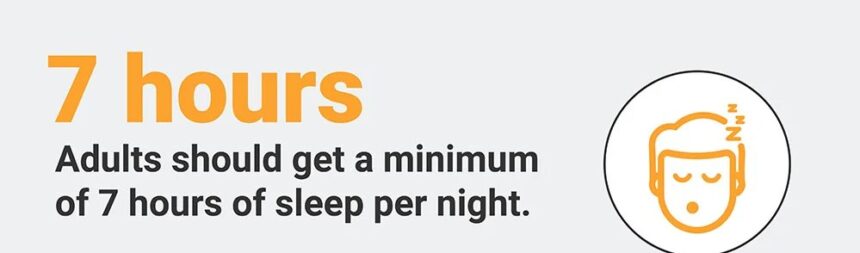
Here is why 7 hours of sleep is your non-negotiable operational baseline.
1. The Glymphatic Wash: Your Brain’s Nightly Janitor
Think of your brain as a high-performance corporate headquarters. During the day, regular operations generate an immense amount of metabolic waste. When you fall asleep, your brain activates a specialized waste clearance mechanism called the glymphatic system. This system pumps cerebrospinal fluid through your brain tissue, effectively power-washing cellular debris, including toxic proteins linked to neurodegenerative decline.
This deep-cleaning mechanism requires time to ramp up and execute efficiently. When you cut your night down to five or six hours, you are essentially firing your cleaning staff halfway through their shift. The resulting accumulation of toxic metabolic byproducts explains the profound brain fog, slow processing speeds, and diminished memory retention you experience the morning after a short night.
2. Cognitive Arbitrage and the Cost of Brain Fog
In the financial markets, arbitrage is the practice of taking advantage of a price difference in two or more markets. When you cheat your sleep to secure two extra hours of late-night work, you are attempting a reckless cognitive arbitrage. You believe you are trading cheap rest for valuable output, but the math does not track.
Data indicates that a brain operating on six hours of sleep suffers from micro-sleeps fraction-of-a-second lapses in attention that completely disrupt deep, analytical focus. The work you produce in that exhausted state takes twice as long and requires heavy editing the following morning. Sleep deprivation causes a direct drop in executive functioning, meaning the strategic decisions you make will suffer from structural flaws that cost you time, reputation, and capital to fix.
3. The Prefrontal Cortex vs. The Amygdala
Have you ever noticed how a minor workplace disagreement or an unexpected bill feels completely overwhelming when you are tired? That is not a failure of character; it is a neurological breakdown. When you experience chronic sleep deprivation, the functional connectivity between your prefrontal cortex the logical, rational seat of your brain and your amygdala, which regulates your raw emotional responses, gets severed.
Without the steady, calming influence of the prefrontal cortex, your amygdala goes into hyper-drive. You view minor challenges as existential threats. This emotional volatility damages your personal relationships, skews your tolerance for financial risk, and leaves you vulnerable to impulsive, fear-driven decisions that you would easily avoid after a solid night of rest.
4. Hormonal Chaos: The Direct Link to Appetite and Weight
Your physical health and metabolic baseline are deeply tied to your sleep cycle. Your body relies on a delicate balance of two primary hormones to manage your appetite: ghrelin, which signals hunger, and leptin, which signals fullness. When you drop below the seven-hour threshold, this hormonal system breaks down.
Your ghrelin levels spike wildly, while your leptin levels plummet. Your biology screams that you need quick, calorie-dense energy, driving intense cravings for simple carbohydrates and processed sugars. No amount of pure willpower can sustainably fight this physiological survival response, which is why poor rest is a primary contributor to systemic metabolic dysfunction and unexpected weight gain.
5. Immune System Bankruptcy and Long-Term Vulnerability
Think of your immune system as your body’s defensive reserve fund. While you sleep, your body produces and releases cytokines specialized proteins that target infections and inflammation. Shortchanging your sleep starves this defensive fund, leaving you exposed to external risks.
People who sleep fewer than seven hours a night are significantly more likely to catch common viruses. Over time, this chronic immune vulnerability turns into systemic inflammation, raising your risk profile for cardiovascular challenges, insulin resistance, and long-term metabolic strain. Investing in premium wellness supplements while ignoring your sleep baseline is like buying expensive detailing for a car with a broken engine.
6. Breaking the Cycle of Chronic Insomnia
For many professionals, the issue isn’t a lack of intent, but the frustration of tossing and turning. Chronic stress triggers a state of hyperarousal, transforming basic sleep deprivation into structural insomnia. Your bedroom becomes associated with work anxiety rather than deep relaxation.
To break this loop, you must treat your evening wind-down with the same discipline you bring to a critical business merger. Your brain requires a clear transition zone to trigger melatonin production. Eliminating high-intensity blue light, stepping away from financial spreadsheets, and cooling your environment down are mandatory operational steps to protect your sleep health.
7. The Capital Allocation View of Rest
Let’s reframe the entire conversation: sleep is not a cost item; it is a high-yield capital investment in your personal infrastructure. When you prioritize a minimum of seven hours of high-quality rest, you are ensuring your cognitive engine operates at peak efficiency. You process information faster, manage emotional stress with balance, and preserve your long-term physical capacity.
Protecting your sleep requires setting firm boundaries around your time and managing the expectations of those around you. It means recognizing that pushing through exhaustion to look busy is an inefficient use of your energy. True high performance is built on sustainable energy, not chronic exhaustion.
Your Next Operational Step
Look at your schedule for the upcoming week and identify the exact block of time required to get seven full hours of sleep tonight. Protect that boundary aggressively. Turn off your screens 45 minutes before your target bedtime, clear your workspace, and let your brain run its essential nightly maintenance. Your health, your clarity, and your bottom line will thank you.