

You look at your alarm clock, feel a familiar wave of dread, and wonder if you are genuinely meant to exchange 40 hours of your weekly life for a paycheck until you turn 65. If you are sitting at a desk in London, Nairobi, Singapore, or New York, the math of standard modern adulthood can feel like a raw deal. You love your field, perhaps, but you likely value your autonomy significantly more.
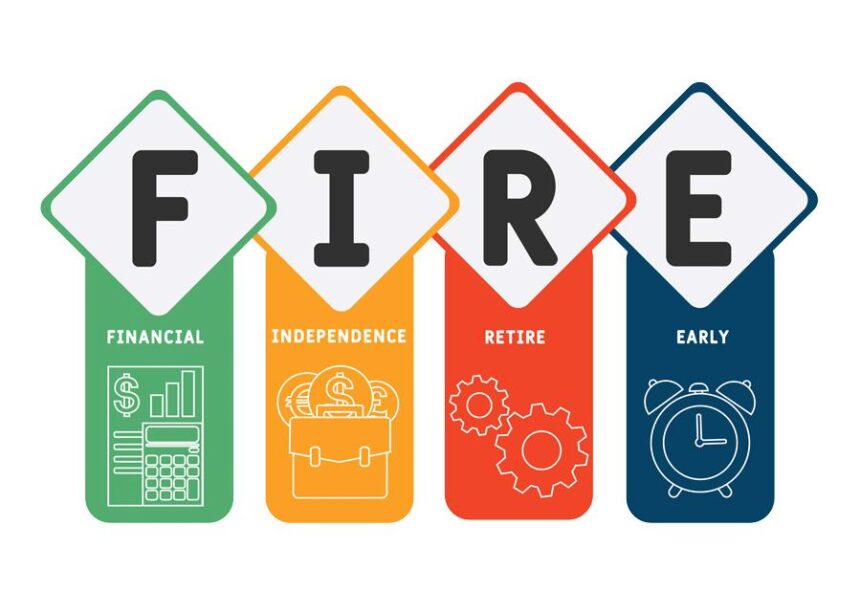
This reality explains why a growing collective of professionals under 45 are abandoning standard retirement timelines entirely. They are opting for a blueprint known as FIRE, which stands for Financial Independence, Retire Early. Far from a passing internet trend, this philosophy has matured into a sophisticated, cross-border economic framework designed for anyone who wants to purchase their lifetime freedom ahead of schedule.
Achieving an early retirement is not a privilege reserved for tech founders or lottery winners. It is an engineering challenge. Here is how the movement operates globally, and how you can apply its mechanics to your own balance sheet.
1. Decouple Freedom from Longevity
Traditional financial planning assumes you will work until your hair turns silver, drawing down on a pension while slowing your pace of life. The FIRE movement flips this narrative completely. Financial independence means you no longer work because you require the cash flow to survive; you work only if the project satisfies your intellectual curiosity.
Early retirement in this context does not imply lounging on a tropical beach for four consecutive decades—that is a recipe for existential boredom. Instead, it means acquiring complete control over your daylight hours. When your investments cover your living expenses, your career transitions from a survival mechanism into a voluntary pursuit.
2. Calculate Your Core Baseline Number
To walk away from a mandatory paycheck, you need to know exactly how much money it takes to sustain your existence. The absolute bedrock of the FIRE movement is a mathematical shortcut known as the Rule of 25. This rule states that to retire early, you must accumulate a dedicated investment portfolio equal to 25 times your annual living expenses.
If your annual household expenses total $40,000, your targeted freedom baseline is $1,000,000 ($40,000 × 25). If you live in a lower-cost hub and spend $24,000 annually, your target scales down to $600,000. Once your portfolio crosses this threshold, you have achieved baseline financial independence.
3. Master the Safe Withdrawal Rate
Why does the Rule of 25 work reliably across shifting economic cycles? It is based on historical market data analyzing the safe withdrawal rate the percentage of your portfolio you can draw down each year without running out of capital before you die. Most practitioners anchor their strategies around the famous Four Percent Rule.
Derived from an influential financial study called the Trinity Study, this principle suggests that if you invest your wealth in a balanced mix of global equities and bonds, you can safely withdraw 4% in your first year of retirement, adjust that amount annually for inflation, and maintain a highly secure probability that your nest egg will outlive you. If your asset base is $1,000,000, a 4% withdrawal yields $40,000 a year to live on.
4. Choose Your Flavor of Freedom
The global community has realized that a one-size-fits-all approach fails because everyone defines comfort differently. Consequently, three primary variations of financial independence have emerged:
- Lean FIRE: This is for minimalist adherents who optimize their lives for extreme efficiency. They target lower annual expenses (often under $30,000 globally) to cross the finish line as rapidly as possible.
- Fat FIRE: The option for professionals who refuse to sacrifice their standard of living. This path requires a significantly larger portfolio to fund fine dining, extensive international travel, and premium housing during early retirement.
- Barista FIRE: A pragmatic hybrid strategy. You save enough to cover your core long-term needs, allowing you to quit the stressful corporate race and take a low-pressure, part-time job or run a small artisanal business purely for health insurance or structural routine.
5. Maximize Your Savings Rate Aggressively
The typical worker saves roughly 5% to 10% of their net salary, which guarantees a traditional 40-year working timeline. To accelerate your early retirement path, you must look closely at your savings rate—the percentage of your disposable income you preserve after expenses.
Adherents of the movement routinely save 40%, 50%, or even 70% of their earnings. If you save 50% of your income, you earn one year of pure freedom for every single year you work. Achieving this requires aggressive optimization of your major structural costs: housing, transportation, and lifestyle inflation. It means driving a reliable used vehicle instead of financing a luxury model, and aggressively investing every single corporate raise rather than expanding your lifestyle footprint.
6. Deploy Capital into Automated Global Assets
You cannot simply save your way to early retirement; cash sitting in a traditional savings account loses its purchasing power to inflation. You must invest your savings into productive, income-generating assets. The global standard for this is low-cost, broad-market equity index funds and exchange-traded funds (ETFs).
These financial instruments allow you to own a microscopic slice of hundreds of the world’s most profitable corporations simultaneously. By automating your investments so a portion of your paycheck buys these funds every month—regardless of whether markets are up or down you harness the compounding power of global economic growth. Over long horizons, historic equity markets have returned an average of 7% to 9% annually when adjusted for inflation.
7. Eliminate Toxic Debt Instantly
High-interest consumer credit cards and personal loans are absolute kryptonite to wealth building. Paying 18% interest to a bank while trying to earn 8% in global markets is a mathematical paradox that dooms your financial independence journey before it begins.
Before you commit a single dollar to an index fund, aggressively wipe out every line of consumer debt. Treat debt payoff as a guaranteed investment return equal to the interest rate you are avoiding. Clearing an 11% personal loan is functionally identical to finding an investment that guarantees a risk-free 11% return.
8. Optimize Your Global Tax Shelters
Wealth building is not merely about how much your portfolio earns; it is heavily dictated by how much you keep out of the hands of tax authorities. Successful retirement strategists become absolute experts in their local tax codes.
Whether you utilize an ISA in the United Kingdom, a 401(k) and Roth IRA in the United States, an RRSP in Canada, or tax-advantaged private pension wrappers across Europe and Africa, you must legally shelter your investments. Reducing your current tax liability increases your investable income today, compounding your timeline to freedom exponentially.
The journey toward early retirement is ultimately less about tracking pennies on a spreadsheet and far more about claiming complete ownership of your life. Every dollar you choose to invest instead of spend buys you a sliver of time, a margin of safety, and options for your future self. Take twenty minutes today to audit your last three months of expenses, calculate your unique baseline numbers, and establish an automated transfer to an investment account. Your future, entirely unscripted self will thank you.