
Take a second to check your screen time from yesterday or look at your calendar for the coming week. Between managing a career, keeping up with inflation, and attempting some semblance of a social life, your schedule is likely packed to the brim. But while you are busy managing your career and investments, there is a silent, invisible drain operating in the background of your life and the lives of more than 1.3 billion people globally.
It is called high blood pressure, and it is no longer just a medical issue for your grandparents.
According to the World Health Organization, hypertension (the medical term for chronically high blood pressure) affects roughly one in three adults worldwide, making it one of the largest global health crises of our time.
For our generation educated, ambitious professionals between 25 and 45 this is an economic and personal risk we cannot afford to ignore. We often view health as something to optimize later, but high blood pressure is actively chipping away at global productivity and compounding the risk of severe heart disease today. Think of it as a bad high-interest loan: you don’t feel the damage day-to-day, but the compounding interest will eventually bankrupt the system.
Here is a no-fluff guide to understanding this global crisis, how it impacts your wallet, and how to manage your cardiovascular health without treating it like a second job.
1. The Numbers on the Monitor Matter
When you get your blood pressure checked, you are handed two numbers, usually looking something like 120/80. The first number is your systolic pressure (the force when your heart beats), and the second is your diastolic pressure (the force when your heart rests between beats).
Medical guidelines classify a reading of 130/80 or higher as stage 1 hypertension. You do not need to feel sick to have it; in fact, about 46% of adults with high blood pressure globally have no idea they are walking around with it. It is entirely asymptomatic until it isn’t.
2. The Micro-Economics of a Macro Crisis
From a finance perspective, untreated high blood pressure is a massive net-negative asset. Recent economic data from organizations like the Office of Health Economics highlights that cardiovascular conditions cost the global economy upwards of $680 billion annually in direct healthcare expenditures alone. When you factor in lost productivity, absenteeism, and early retirement, that economic burden balloons to over $1.4 trillion, roughly 0.7% of global GDP.
On an individual level, ignoring your readings today means paying massive out-of-pocket medical premiums and prescription costs and risking early disability during your peak earning years.
3. The “Silent Killer” Mechanics
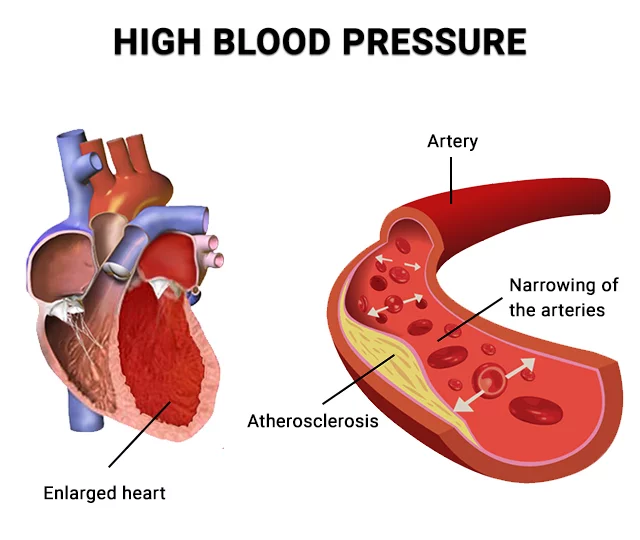
Why does a little extra pressure in your tubes matter so much? Imagine hooking up a high-powered commercial fire hose to your standard home kitchen sink plumbing. Over time, the excessive pressure erodes the delicate inner lining of your arteries.
This structural damage makes it incredibly easy for cholesterol and fat to collect along the arterial walls, a process that restricts blood flow and can lead to a sudden blockage. This is the exact mechanism behind a heart attack or stroke. In short, unmanaged blood pressure is the single greatest accelerator of premature cardiovascular health decline.
Normal Range:       Less than 120 / 80 mmHg
Elevated:           120–129 / Less than 80 mmHg
Hypertension:       130+ / 80+ mmHg
4. Chronic Stress and the Corporate Tax
Our demographic faces an unprecedented level of cognitive load and workplace stress. When you operate in a state of chronic stress, your body constantly pumps out adrenaline and cortisol. These hormones narrow your blood vessels and force your heart to beat faster, temporarily spiking your numbers.
While short bursts of stress are completely natural, living in a permanent “always-on” corporate grind means your blood vessels never get a chance to dilate and relax, transforming a temporary spike into chronic systemic damage.
5. The Salt and Sedentary Trap
The modern convenience economy is heavily rigged against your heart. Packaged office snacks, fast-casual lunches, and delivery apps are notoriously laden with sodium to preserve shelf life and flavor. Excess sodium causes your body to retain fluid, which increases the total volume of blood moving through your pipes, directly elevating the pressure.
Combine a high-sodium diet with an 8-to-10-hour desk-bound routine, and your vascular system loses its natural elasticity. Regular movement acts as a literal release valve for arterial tension.
6. Globalization is Spreading the Burden
This is no longer a localized issue native to Western nations. The shifting lifestyle dynamics of urbanization mean that low- and middle-income regions are experiencing the fastest-growing rates of heart disease globally.
Data shows that over three-quarters of all cardiovascular deaths now occur in developing and emerging markets. The rapid transition to sedentary desk jobs and processed diets across major urban hubs worldwide has outpaced public health infrastructure, making awareness a critical individual responsibility.
7. Simple Portability: The Home Monitor Advantage
The smartest financial move you can make for your health is completely low-cost: buy an automated, upper-arm blood pressure monitor for your home. Checking your numbers in a calm environment completely eliminates “white coat syndrome,” a common phenomenon where your blood pressure spikes simply because you are sitting in a stressful doctor’s office.
Knowing your baseline data gives you total leverage over your long-term health outcomes, allowing you to catch subtle upward trends years before they require aggressive medical intervention.
The 80x80x80 Target: Global health organizations are currently pushing for a massive 2030 target: ensuring 80% of people with hypertension are diagnosed, 80% of those diagnosed are treated, and 80% of those treated achieve safe control. Right now, global control rates sit under 20%.
Your Action Plan
Managing your cardiovascular system does not require completely upending your entire life or adopting an extreme lifestyle. Small, highly strategic shifts yield massive compounding returns over time. Reducing your daily sodium intake by just a third, committing to 20 minutes of brisk walking during your lunch break, and actively setting boundaries on your work notifications can drop your numbers significantly.
Do not let your health turn into an unmanaged liability. Your absolute best call to action today is to order a highly rated home blood pressure monitor online or stop by a local pharmacy to get a baseline reading. Log the number, know your baseline, and protect your most valuable financial asset: your ability to show up and perform every single day.