

You just landed in Lisbon, coffee in hand, ready to relax after a long red-eye. Instead, you’re juggling three open tabs: a guesthouse that still hasn’t confirmed your group’s room block, a bus company that needs a deposit, and a local supplier who promised welcome kits by Thursday. If you run a travel business, manage logistics for friends, or operate a lean remote team, you know this feeling. You spend more time buying things than living the trip.
- What Agentic AI Commerce Actually Means (and Why “Agentic” Is More Than a Buzzword)
- How Businesses Especially on the Road — Are Using It Now
- Finding Vendors Without the Spreadsheet Marathon
- Managing Supplies for Rentals and Remote Workspaces
- Handling Recurring Orders and Renewals
- Logging Expenses Without the Midnight Copy-Paste
- The Numbers Behind the Shift
- The Honest Risks Before You Hand Over Your Wallet
- How to Start Without Losing Control
- To Wrap This Up Naturally
The good news is that Agentic AI Commerce is already changing how lean operators handle procurement, and it’s far more practical than it sounds. We’re talking about systems that don’t just chat politely; they actually take action. They can research vendors, compare quotes, place orders, and manage renewals while you’re out exploring a market or taking a nap between flights. It’s not some distant robot takeover; it’s here now, and if you’re trying to run a business from a café or a hostel dorm, it matters more than ever.
What we’ll cover is simple: how this new approach actually works, why AI is now making purchasing faster and more consistent for busy operators, and what you should watch out for before you let a digital assistant touch your budget. Whether you’re a solo travel planner, a small agency owner, or just someone trying to organize a group adventure without losing your mind, this is worth understanding.
What Agentic AI Commerce Actually Means (and Why “Agentic” Is More Than a Buzzword)
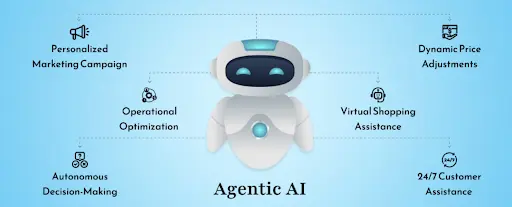
When most people hear “AI,” they picture a chatbot that answers questions politely but stays in its lane. That’s useful for customer service, but Agentic AI Commerce is a different beast entirely. The word “agentic” comes from “agent” — it means the system acts with purpose, not just reaction. It can plan, decide, and execute within rules you set.
Think of a traditional travel agent who only sends brochures. Now imagine one who actually books your flight, checks your passport details, compares three hotels, and sends the invoice to your client all without you clicking through every screen. That second version is agentic. It doesn’t wait for you to approve each tiny step. It handles the middle work because you gave it a clear goal.
In commerce, that translates to a system that can scan vendor directories, read current prices from websites, check your past orders, and complete a purchase inside boundaries you define. You set the budget, quality standards, and approval limits. The AI works within those guardrails. That distinction is everything.
Here is what separates it from basic automation:
- It handles unstructured data. Instead of requiring everything in a neat spreadsheet, it reads supplier emails, catalogs, and PDFs.
- It makes judgment calls within limits. You set a budget cap and vendor preferences, and it operates inside those rails.
- It takes multi-step actions. Not just “order more coffee,” but “find three suppliers, compare shipping to Lisbon, pick the best, and update our accounting tool.”
Agentic AI Commerce is not about replacing your judgment it’s about removing the repetitive middle. A simple macro can reorder supplies when a spreadsheet hits zero. But when a supplier email says “delivery delayed due to weather” and you need a backup in another country, a basic tool stalls. An agent can read the delay, check your guidelines, search alternatives, and either propose a switch or complete one if you’ve allowed it. That adaptability is why travel operators and remote workers are turning to it.
How Businesses Especially on the Road — Are Using It Now
This is where the idea stops being abstract and starts looking like your actual life. You don’t need a corporate procurement department. You just need a few smart workflows.
Finding Vendors Without the Spreadsheet Marathon
When you’re organizing group travel, you often need local partners fast. Maybe a van service in Sofia for eight passengers, a guided walking tour in Sarajevo, or a restaurant that can seat fifteen for a farewell dinner. Normally you’d open ten browser tabs, send ten emails, and wait for replies.
With agentic tools, you describe the need once: “Find a reliable van service near Sofia, available next Monday, with insurance and English support.” The system searches directories, reads reviews, checks availability calendars, and either books a hold or sends a comparison for your final yes or no. It saves the hunt, but you keep the choice. You stay the strategist; the AI becomes your researcher. That’s the core promise of Agentic AI Commerce: it connects the search, the order, and the record into one smooth flow.
Managing Supplies for Rentals and Remote Workspaces
If you manage an Airbnb, a coworking space, or even just maintain stock for group gear, you know the frustrating cycle. You run out of coffee or toiletries, realize it too late, and scramble.
Agentic systems can monitor inventory through your sales platforms or simple sensors, then reorder when stock hits a threshold. You set the brand and budget; it handles the logistics. For a remote operator in Lisbon, that might mean supplies arriving exactly when needed, without a Sunday-night panic. Stock management becomes a background process, not a weekly crisis.
Handling Recurring Orders and Renewals
Many small travel agencies have fixed monthly needs: charter buses for weekend departures, airport greeting services, or branded welcome bags. Rather than calendar reminders and manual emails, you can build a recurring agent.
It checks prices, confirms supplier availability, and places orders automatically but flags any price jump above a set percentage so you can review. It’s like having a very organized assistant who never forgets a subscription but always knows when to ask for permission. For anyone running lean on the road, that mental space is gold.
Logging Expenses Without the Midnight Copy-Paste
Here is a quieter win. When an agent completes a purchase, it can log the transaction in your accounting tool with the correct category and currency conversion. You’re not copying numbers from an email receipt at midnight. The data flows where it belongs. Automation works best when it connects your buying to your bookkeeping.
The Numbers Behind the Shift
You don’t need to trust the hype blindly. The shift is measurable, even for lean operations.
Manual procurement for small service businesses typically consumes 10 to 15 hours per week searching, emailing, comparing, confirming, and correcting errors. When you manage logistics across borders, that number climbs. By contrast, businesses that have integrated autonomous purchasing tools report reclaiming 60 to 70 percent of that time.
Those aren’t just corporate statistics. They translate to real life: that’s one extra evening in a Lisbon market, one unhurried breakfast before a group departure, or simply a night of sleep instead of spreadsheet work. Because AI Is Now Making Purchasing faster and with fewer human bottlenecks, a solo operator can grow without hiring a full-time buyer.
Of course, these tools work best when you have clear rules. The more specific you are about quality, budget, and vendor preferences, the better the agent performs. It’s like giving a local guide your exact interests they’ll find the best spots faster.
Time saved is not just efficiency it’s freedom to actually travel.
The Honest Risks Before You Hand Over Your Wallet
Now, let’s stay honest. Agentic systems learn from patterns, but they can make mistakes. A wrong vendor selection, a missed delivery window, or an order sent to the wrong country can cost you more than the time you saved. You also need to watch data privacy: these agents often need access to your accounts, vendor directories, and sometimes payment details.
There’s a subtler danger: over-reliance. If you stop reviewing orders because the AI is “good enough,” you might miss a supplier quietly changing terms, a fraud attempt, or a price spike hiding in a batch of orders.
So treat it like a talented junior partner, not an unsupervised manager. Set spending caps. Require approval for orders above a certain amount. Review exceptions every week.
Never set an agent loose without guardrails and a weekly check-in.
How to Start Without Losing Control
If you want to try this, start with one category of purchase and a tight boundary.
- Pick one repetitive purchase. Maybe it’s monthly bus charters, coffee supplies, or software subscriptions. Don’t try to automate everything at once.
- Write your rules down. Be specific: approved vendors, budget ceilings, delivery windows, and quality standards.
- Run a test week with approval required. Let the agent find and propose orders, but make it ask you before it completes them. Trust builds slowly.
- Check results every Friday. Look at what it bought, what it saved, and whether anything felt off. Adjust your rules based on reality.
- Expand slowly. Once one flow works smoothly, add another category.
You don’t need to be technical. Most platforms now offer visual builders where you connect your apps with drag-and-drop logic. The hard part isn’t the tool; it’s deciding exactly what you want it to do.
Start small, test often, and always keep one hand on the wheel.
To Wrap This Up Naturally
You don’t have to become a tech expert to benefit from this shift. Agentic AI Commerce is really about giving you back your attention. Instead of being the human bridge between vendors, emails, and spreadsheets, you become the strategist who decides where your business goes.
The best part is that these tools adapt to your life on the road. They don’t require a corporate IT department or a fixed desk. They just need clear instructions and a little oversight.
So pick one annoying purchase process this week. Write a simple rule. Watch what happens. You might find that your business finally fits in the same bag as your luggage light, flexible, and ready for wherever you land next.
Agentic AI Commerce is reshaping business buying. Learn how AI is now making purchasing faster, with smart automation for busy operators on the move.